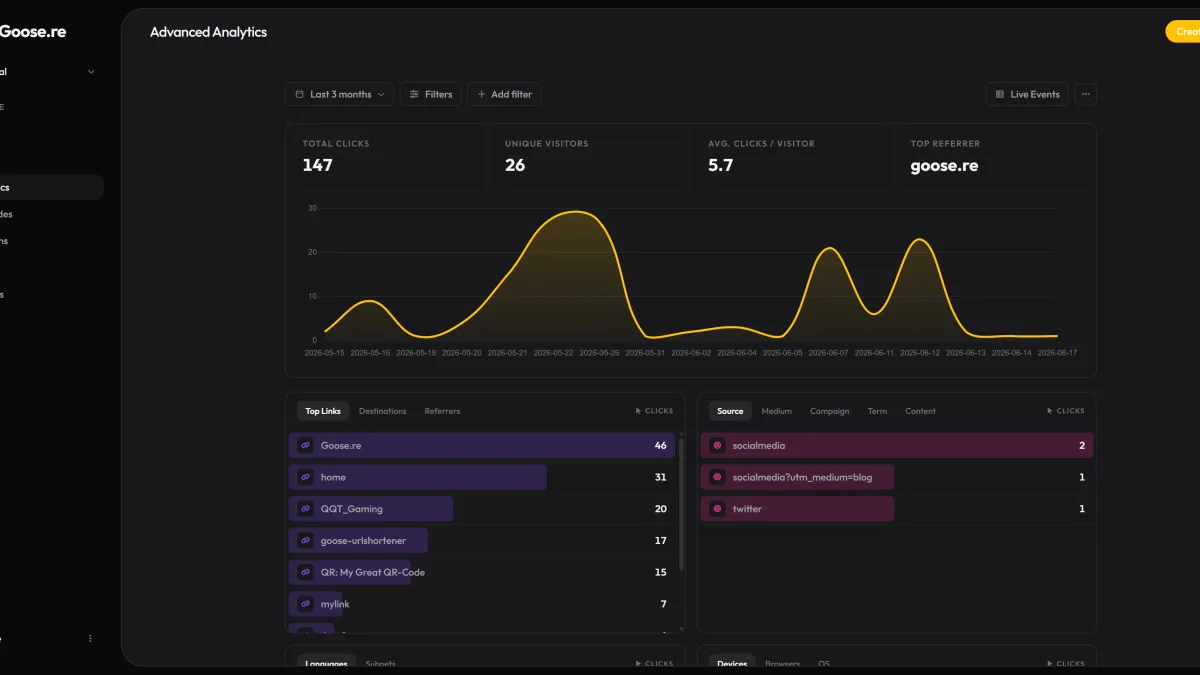
A URL shortener turns a long destination into a compact redirect. The useful part is not the character count alone; it is the ability to manage how a link is presented, routed, and measured.
1. Cleaner sharing
Short links are easier to place in print, presentations, messages, and spoken instructions. A readable custom slug can also explain the link’s purpose.
2. Destination maintenance
A managed link can point to an updated destination without changing the shared short URL. This is useful for printed material and recurring campaigns, as long as the short domain remains under control.
3. Campaign organization
Titles, folders, tags, and consistent naming help teams find links and understand why they were created. UTM templates can reduce inconsistent campaign labels.
4. Directional analytics
Goose.re records click trends and technical request context such as referrer, language, device class, browser, operating system, subnet, and UTM values when available. Those signals do not identify a conversion or provide precise geography.
5. Routing options
Links can use instant, destination-screen, or password-protected flows and can include weighted destinations or targeting rules. Choose the simplest behavior that matches the audience and explain unexpected steps.
Security and trust limits
HTTPS protects data in transit but does not prove that a destination is honest. A short URL can also conceal a harmful page. Use recognizable domains, truthful labels, Goose Shield checks, and the public Link Checker as layers—not as guarantees.
No universal click-through improvement can be promised. Measure the outcome for the specific audience and campaign.